September 7, 2026 Post by : Editorial Reviews
Review: A Chilling New Voice in Southern Gothic
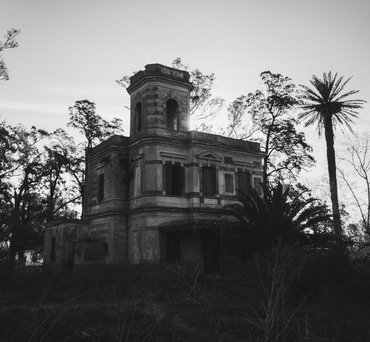
In classic Gothic fiction, the haunted house was a stage. It had atmosphere, history, a few creaking floorboards and a portrait with moving eyes. But it was not, strictly speaking, alive. That has changed. In modern Gothic horror, the house is not a place where terrible things happen. The house is the thing that makes them happen. It is a predator, and its preferred prey is the family.
Shirley Jackson's The Haunting of Hill House is the hinge point. Hill House is not simply haunted; it is "not sane." It selects Eleanor. It isolates her. It offers her belonging and then consumes her. Jackson's genius was to make the house's malice indistinguishable from its architecture — the angles that are slightly wrong, the rooms that lead nowhere, the doors that close on their own. The house does not need a ghost. It is the ghost.
The Family as Prey
What modern Gothic has added to Jackson's template is a focus on the family as the house's natural prey. In Mark Z. Danielewski's House of Leaves, the house on Ash Tree Lane is not haunted by a person but by a space — a hallway that should not exist, a darkness that grows, a labyrinth that rearranges itself. The Navidson family is not attacked by a ghost. They are slowly separated, one by one, by a house that seems to be digesting them.
Silvia Moreno-Garcia's Mexican Gothic takes this further. High Place is not just a house; it is a body. It breathes. It has a heartbeat. It is sustained by a family that has made a bargain with something older and hungrier than itself. The horror is not supernatural in the traditional sense. It is biological. The house is an organism, and the family is its food source. Moreno-Garcia understands that the most intimate horror is the one that comes from inside the home, from the people who are supposed to protect you.
This is the key shift. In the classic Gothic, the threat came from outside — a vampire, a ghost, a madwoman in the attic. In the modern Gothic, the threat is the house itself, and the house is a metaphor for everything that can go wrong in a family: secrets, control, inheritance, the slow poison of tradition. The house does not need to be haunted. It needs to be inherited.
Why We Fear the Familiar
The house that eats is terrifying because it is familiar. We all live in houses. We all know the feeling of a room that seems to watch us, a hallway that feels longer at night, a door that we are sure was closed. The Gothic takes that feeling and asks: what if you are right? What if the house is not just a building? What if it is awake?
This is not a new fear, but it is one that has become more acute as our relationship with domestic space has changed. We spend more time at home than ever. We work there, sleep there, raise children there. The house is no longer just a shelter. It is a container for our entire lives. And if the container is hostile — if it wants something from us — there is nowhere to go.
The house that eats is the Gothic's most enduring monster because it is the one we cannot escape. You can leave a haunted castle. You can move out of a cursed manor. But you always have to live somewhere. And somewhere, eventually, is always hungry.


Author

22 feb,2025
This incident opened my eyes to the value of Insurance in general, so I decided to examine my personal and business insurance.


Comment (3)
The payments are made directly from one person to another without passing through a central bank or clearing house.
22 feb,2025
ReplyFive Forgotten Gothic Novels Worth Rescuing from the Shelf
23 feb,2025
ReplyThe Woman in the Wall: Madness, Confinement, and the Female Gothic
23 feb,2025
Reply