September 19, 2026 Post by : Editorial Literary Analysis
The Séance and the Screen: How Victorian Spiritualism Shaped Modern Horror
There is a moment in nearly every Gothic novel where a woman is told, gently but firmly, that she is imagining things. The door that will not open, the footsteps overhead, the face at the window — all of it is dismissed as nerves, as hysteria, as the unfortunate imagination of a delicate mind. The Gothic has always known that this dismissal is itself a kind of violence, and it has spent two centuries building houses designed to prove it.
Charlotte Perkins Gilman's "The Yellow Wallpaper" remains the purest distillation of the form. The narrator is not imprisoned in a castle or a crypt but in a nursery with bars on the windows, prescribed a rest cure that forbids her from writing, thinking, or doing anything but resting. The wallpaper becomes her obsession, then her mirror, then her escape. What terrifies us is not the creeping figure behind the pattern but the recognition that the room itself is the illness — that the cure and the cage are the same object.
The Architecture of Female Madness
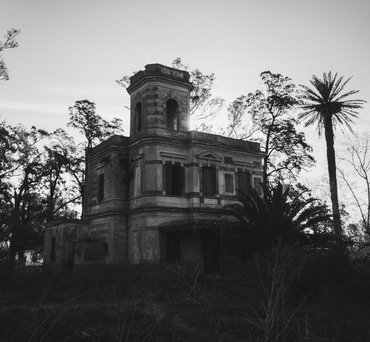
What makes the female Gothic endure is its understanding that domestic space is never neutral. The attic in Jane Eyre, the nursery in "The Yellow Wallpaper," the crumbling estate in Rebecca — these are not backdrops but arguments. They insist that a woman's sanity is contingent on her freedom, and that when freedom is removed, the mind does not simply suffer. It adapts. It finds the hidden door. It becomes the ghost.
Shirley Jackson understood this better than anyone. In The Haunting of Hill House, Eleanor Vance is not a victim of ghosts so much as a woman who has nowhere else to go. The house does not drive her mad; it offers her a kind of terrible belonging. "Hill House, not sane, stood by itself against its hills, holding darkness within." The house is insane because it has been allowed to be. Eleanor is drawn to it because she, too, has been allowed to become something other than human in the eyes of the world.
Contemporary writers have carried this tradition forward with a sharper edge. Sarah Waters' The Little Stranger uses a decaying country house to examine class and repression. Carmen Maria Machado's Her Body and Other Parties fractures the Gothic into something stranger, funnier, and more furious. Each of these works understands that the haunted house is not a metaphor for female madness. It is a metaphor for the conditions that produce it.
Why We Keep Returning to the Room
Readers return to the female Gothic not because they enjoy watching women suffer but because the form offers something rare: a validation of suspicion. The woman who says "something is wrong in this house" is almost never believed, and the horror lies in watching her be proven right. That structure speaks to anyone who has been told their perceptions are unreliable, their fears exaggerated, their anger unfeminine.
The Gothic does not offer escape from the room. It offers a map of it. It says: here are the walls, here are the locks, here is the wallpaper you have been staring at for years. And then it asks the question that has always been at the heart of the genre — what happens when a woman stops waiting to be rescued and starts tearing at the pattern with her bare hands?
That is not madness. That is the beginning of a haunting.


Author

22 feb,2025
This incident opened my eyes to the value of Insurance in general, so I decided to examine my personal and business insurance.




Comment (3)
The payments are made directly from one person to another without passing through a central bank or clearing house.
22 feb,2025
ReplyThe House That Remembers: Why Haunted Architecture Terrifies Us
23 feb,2025
ReplyThe Slow Burn: Why Gothic Horror Refuses to Jump
23 feb,2025
Reply